
⭐ How to Build Your Child’s Confidence in Learning
How to Build Your Child’s Confidence in Learning
Every parent wants their child to feel capable, curious, and excited to learn. But for many kids, confidence doesn’t always come easily.
A difficult math problem, a word they can’t sound out, or an answer they get wrong can quickly turn into:
“I can’t do this.”
“I’m not good at this.”
“I don’t want to try anymore.”
The good news is that learning confidence can grow. And it doesn’t come from getting everything right.
It comes from helping children discover that they can keep trying, make mistakes, learn from them, and eventually figure things out.
Here are some simple ways parents can help build that confidence every day.
🐝 1. Celebrate Effort, Not Just Correct Answers
It’s exciting when your child gets an answer right—but the work they did to get there matters just as much.
Instead of only saying:
“Good job! You got it right!”
Try:
“I love how you kept trying.”
“You worked really hard on that.”
“You didn’t give up even when it got tricky.”
This teaches children that success isn’t about being perfect. It’s about effort, practice, and persistence.
🌱 2. Turn Mistakes Into Part of Learning
Kids can become afraid to answer questions when they think being wrong means they’ve failed.
Help change that message.
A wrong answer can simply mean:
We found something we need to practice.
Ask your child:
“What do you think happened here?”
or:
“Want to try it another way?”
When mistakes feel safe, children become more willing to take chances—and that’s where a lot of learning happens.
🪜 3. Break Big Challenges Into Small Wins
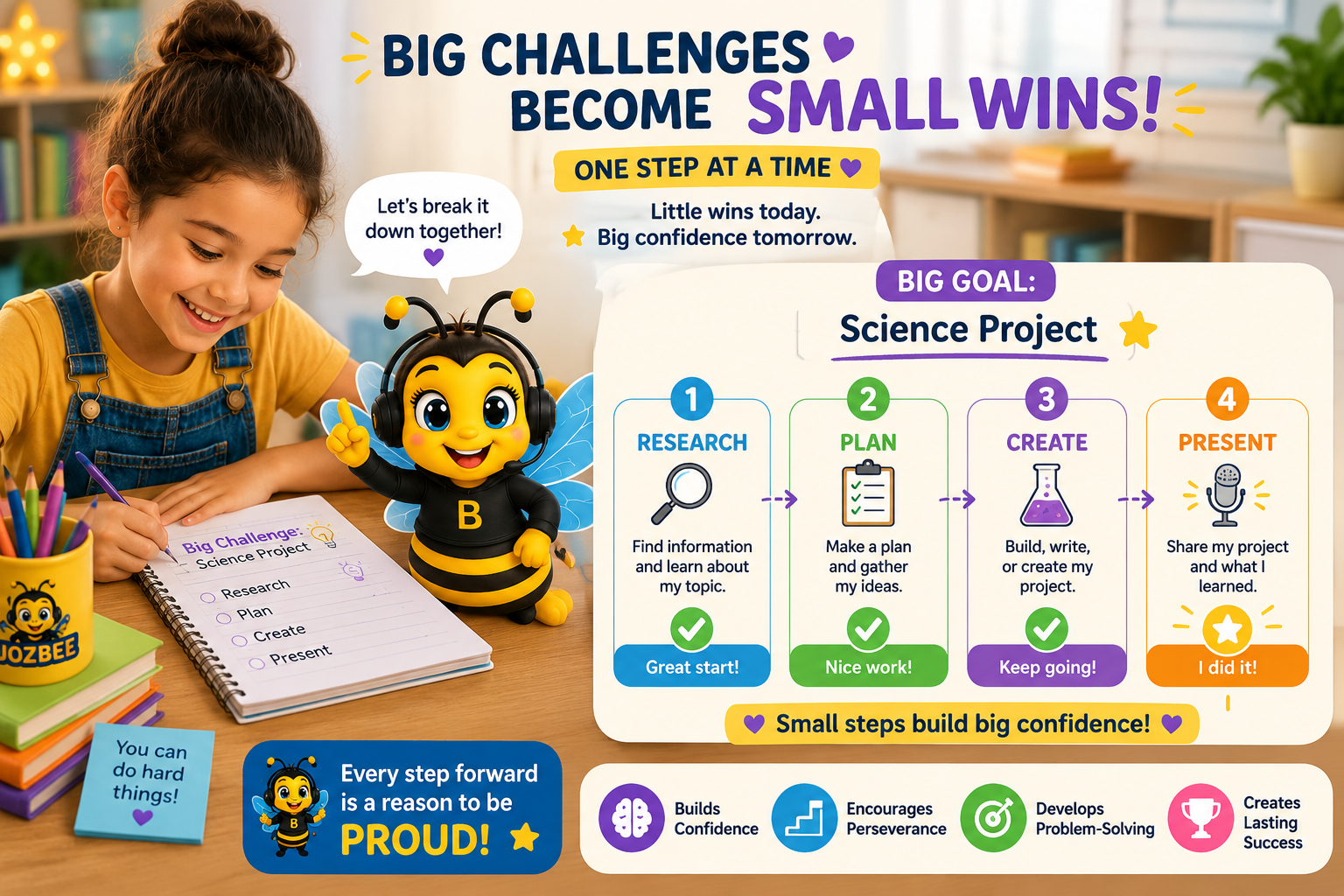
A full worksheet, long reading assignment, or complicated math problem can feel overwhelming.
Instead of tackling everything at once, break it into smaller pieces.
One problem. One paragraph. One step at a time.
Every small success gives your child a reason to think:
“Hey, I CAN do this.”
Those little wins eventually add up to something much bigger: confidence.
💡 4. Find the Way Your Child Understands Best
Not every child learns the same way.
One child may understand something after reading it.
Another needs to see a picture.
Another may need to hear it explained aloud.
And another might understand it immediately once it becomes a game or hands-on activity.
If something isn’t clicking, it doesn’t necessarily mean your child can’t learn it.
Sometimes they simply need it explained differently.
🎮 5. Make Room for Learning Through Play
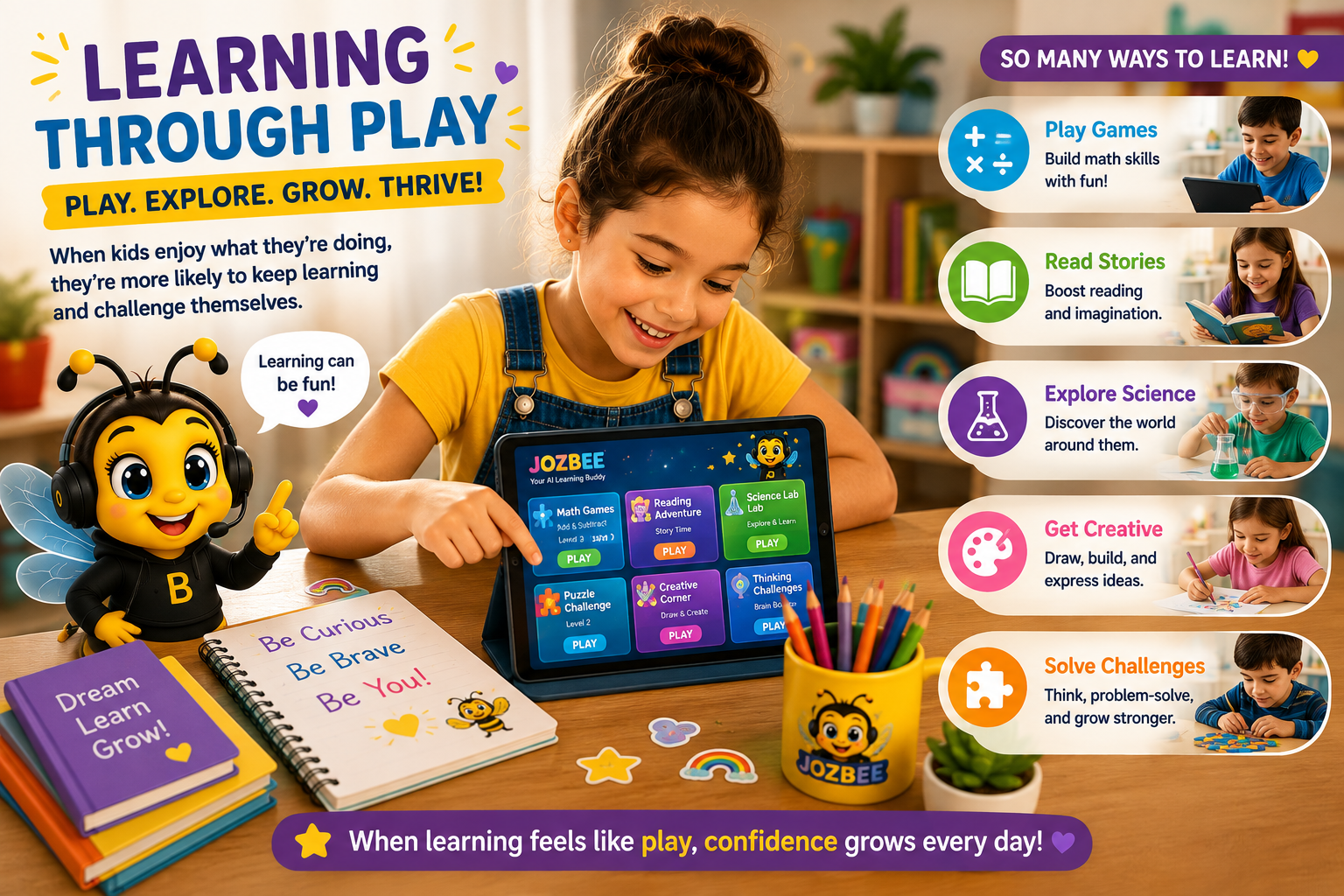
Learning doesn’t always need to look like homework.
Children can practice important skills while playing games, drawing, building, experimenting, telling stories, solving puzzles, or exploring things they’re curious about.
When children enjoy the learning process, they’re often more willing to challenge themselves.
And when they successfully complete those challenges, their confidence grows.
💬 6. Let Your Child Ask for Help
Children shouldn’t feel embarrassed about needing help.
In fact, knowing when to ask for help is an important learning skill.
Try creating an environment where your child knows it’s okay to say:
“I don’t understand.”
“Can you explain that again?”
“Can I have a hint?”
Getting help doesn’t mean they failed.
It means they’re still learning.
⭐ 7. Let Them Experience the “I Did It!” Moment
It can be tempting to jump in when you see your child struggling.
Sometimes, though, giving them a little extra time is exactly what they need.
Offer a hint instead of an answer.
Ask a question instead of solving the problem.
Give them the opportunity to make that final connection themselves.
Because there is a huge difference between hearing:
“Here’s how you do it.”
and proudly saying:
“I figured it out!”
Those are the moments that build confidence.
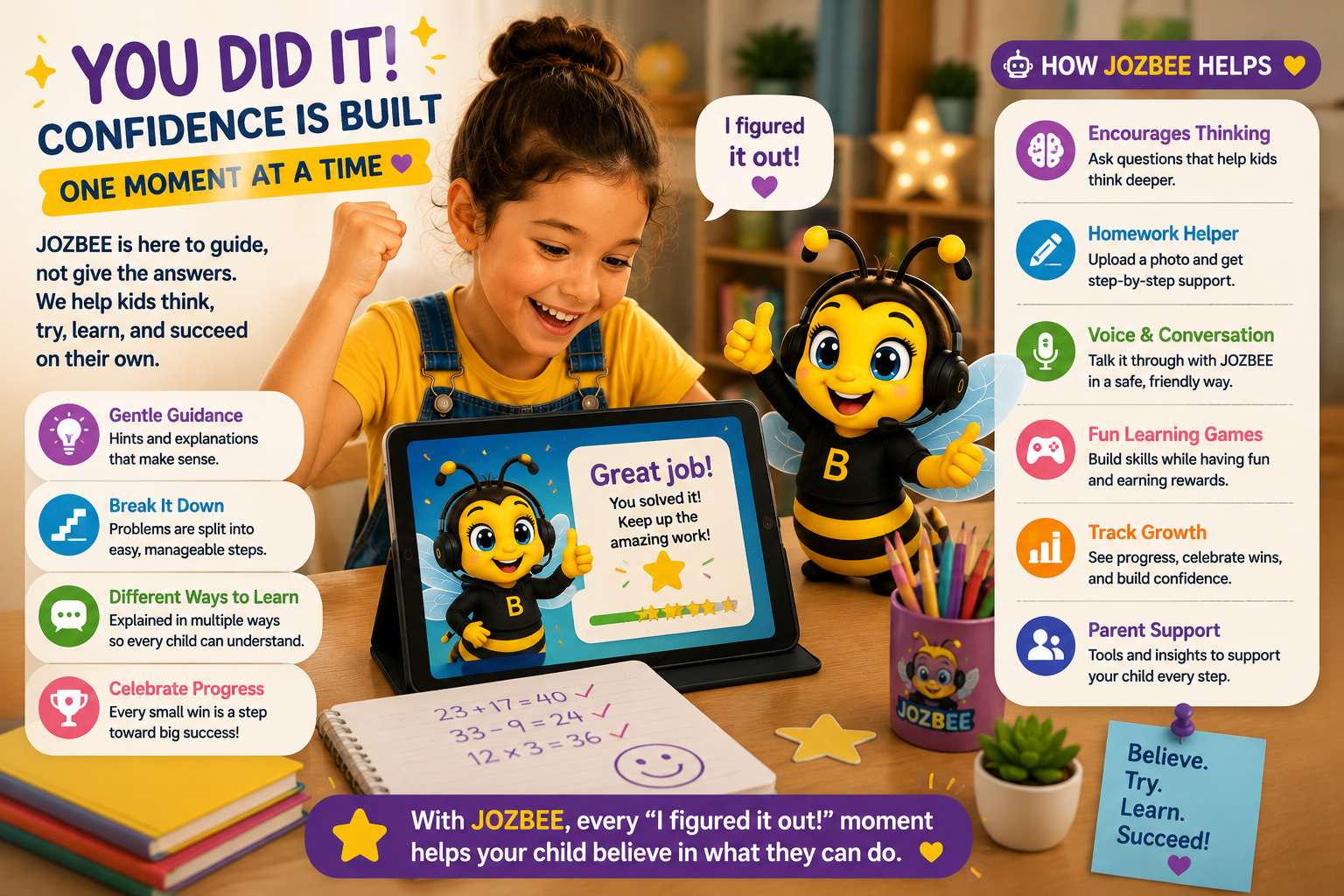
🤖 How JOZBEE Can Help
JOZBEE is being designed around this same idea.
Our goal isn’t to simply give children answers. JOZBEE is designed to become a supportive learning buddy that can encourage kids, offer hints, break problems into smaller steps, explain ideas in different ways, and celebrate progress along the way.
Whether a child is practicing reading, working through math, exploring science, writing, playing a learning game, or asking for homework help, we want them to remain an active part of the process.
The technology should support their thinking—not replace it.
💛 Confidence Grows One Success at a Time
Your child doesn’t need to be the fastest reader.
They don’t need to finish the math problem first.
And they certainly don’t need to get everything right.
What matters is that they begin believing:
“I can learn this.”
“I can try again.”
“I can ask for help.”
“I can figure hard things out.”
That kind of confidence can reach far beyond a worksheet or classroom.
It can change the way a child approaches learning altogether.
